

If you are wondering how to hang pictures without drilling into walls repeatedly, you are not alone. Whether you are a homeowner wanting to preserve pristine plaster, a renter trying to avoid deductions from your security deposit, or a gallery manager who needs to rotate artwork weekly, the traditional hammer-and-nail approach is no longer the best option. Continually pounding nails or drilling holes into your walls leads to unsightly damage, plaster dust, and expensive repair work. Even worse, it locks you into a single static display, making it difficult to adjust the height or alignment of your frames without creating a cluster of patch jobs.
Fortunately, there is a professional, elegant, and highly functional solution that interior designers, architects, and art curators have relied on for decades: picture hanging systems. By utilizing a discreet rail installed at the top of your wall or integrated into your ceiling, you can suspend, adjust, and rearrange your artwork endlessly without ever picking up a drill for a new picture frame again.
In this comprehensive guide, we will explore how these flexible artwork displays work, the components you need to get started, and how to select the right setup to protect your walls while showcasing your art beautifully.
The Ultimate Solution: What Are Picture Hanging Systems?
When searching for ways to hang pictures without drilling, many people first consider adhesive strips or double-sided tape. While these might work temporarily for very lightweight posters, they often fail when subjected to humidity, time, or the weight of framed art and mirrors. When adhesive fails, the artwork crashes to the floor, often resulting in shattered glass and damaged frames. Furthermore, strong adhesives can still tear the paint or drywall paper upon removal.
A much more reliable and sophisticated alternative is installing picture hanging systems. This method requires one initial installation event—mounting a sleek, discreet track along the top edge of your wall or directly to the ceiling. Once this track is secured, the system provides a permanent infrastructure for your artwork. You can hang, move, add, or remove as many pictures as you want, whenever you want, with absolutely zero additional drilling, nailing, or wall damage.
This approach transforms your living room, office, or commercial space into a dynamic gallery environment. It offers total freedom to change your mind about your layout, swap out seasonal decorations, or meticulously align a gallery wall without the anxiety of making irreversible holes in your masonry or drywall.
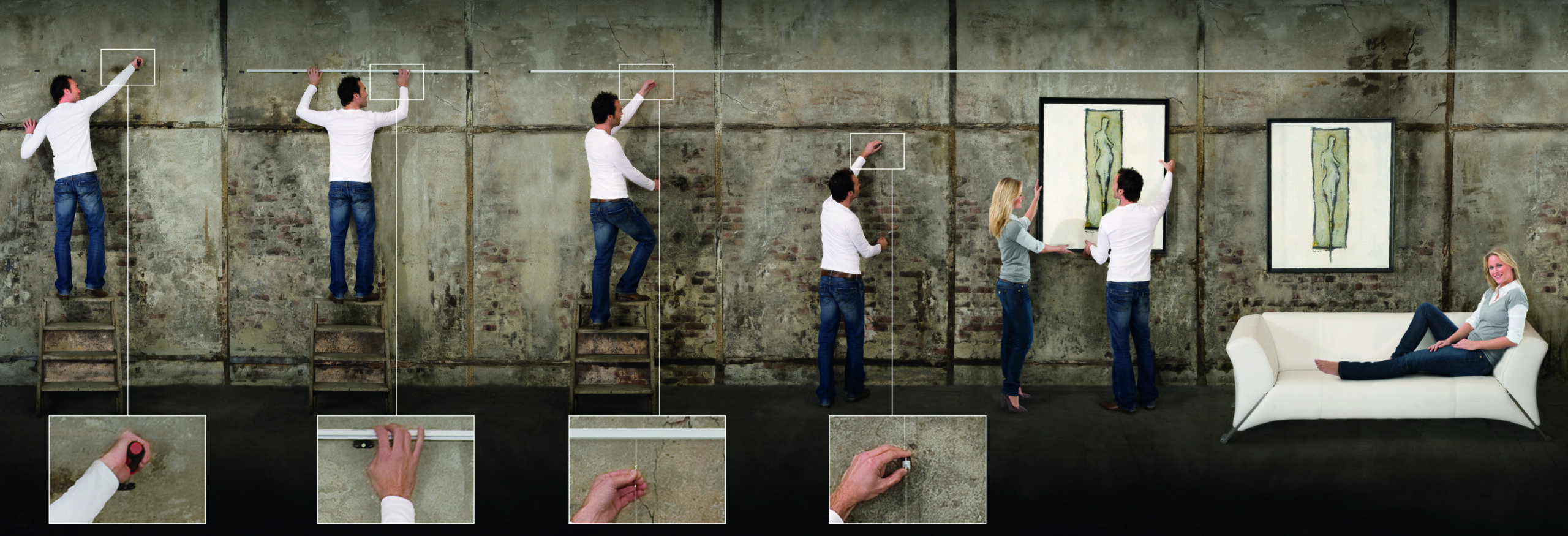 Installing a picture hanging rail allows you to display art effortlessly and adjust layouts without wall damage.
Understanding the Core Components
A professional hanging setup is remarkably simple in its engineering, yet highly effective. It consists of three primary elements that work together seamlessly to safely support your frames. Understanding these components will help you visualize how to hang pictures without drilling directly behind the frame.
Picture Hanging Rails
The foundation of the system. These sleek aluminum extrusions are mounted high up, often blending perfectly with cornices or shadows. Some versions can even be painted to match your wall color exactly.
Picture Hanging Wires
Suspended from the rail, these cords drop down to where your art will sit. You can slide them horizontally along the track to adjust left-to-right positioning. Available in transparent nylon or braided steel.
Picture Hanging Hooks
These slide onto the wires and hold the D-rings or wire on the back of your frame. They can be moved up and down the suspension cord to achieve millimeter-perfect vertical alignment.
By simply sliding the wires horizontally across the rail and adjusting the hooks vertically up and down the wires, you can achieve endless configurations. Whether you want to hang a single statement piece or construct an intricate, multi-frame gallery wall, the process is completely tool-free once the main rail is up.
Where Flexible Artwork Displays Excel
While originally designed for commercial art spaces, the demand for flexible, damage-free hanging solutions has expanded into virtually every type of interior environment. Here is where these systems provide the most value:
- Residential Homes & Apartments: Homeowners love the ability to refresh their living spaces without patching drywall or calling a handyman. In rented properties where landlords strictly prohibit wall alterations, installing a track near the ceiling (often with permission) provides a long-term compromise that saves security deposits.
- Corporate Offices & Boardrooms: Modern workspaces require adaptability. As companies rebrand, earn new awards, or update their corporate messaging, wall-mounted picture rails allow facilities managers to swap out framed certificates and inspirational art in minutes without disrupting office hours.
- Art Galleries & Museums: Curators rotate exhibitions frequently. The constant need to adjust heights for pieces of varying sizes makes a track system not just a luxury, but an operational necessity. It ensures walls remain pristine week after week.
- Hotels & Hospitality Venues: Lobbies and corridors undergo rigorous cleaning and regular design refreshes. Suspended systems ensure that heavy mirrors and framed prints remain securely fastened while still allowing interior designers to update the aesthetic effortlessly.
- Schools & Educational Facilities: Displaying student artwork, informational whiteboards, or temporary notices is much safer and cleaner when utilizing a dedicated hanging track instead of thumbtacks or messy adhesives.
Key Considerations Before Choosing a Hanging System
Not all hanging systems are identical. To ensure your artwork is secure and your display looks intentional and refined, you need to match the system specifications to your specific environment and the art you intend to display. Because weight capacities and installation requirements vary heavily by model, it is crucial to review the specific product guidelines provided by the manufacturer.
Step-by-Step: Setting Up Your Display
While the goal is to hang pictures without drilling repeatedly, the initial setup of the rail does require basic DIY skills or a professional installer. The process involves marking a level line near your ceiling, attaching small installation clips (or brackets) with screws and wall plugs, and then firmly clicking the aluminum track onto these clips. This clever click-system conceals all the mounting screws, resulting in a beautifully clean, architectural finish.
Once the rail is securely clipped to the wall, the fun begins. You simply insert the top end of your hanging wire—usually featuring a specialized glider or cobra head—into the channel of the track. You can insert these anywhere along the line, slide them to the desired horizontal position, and let them hang down. Next, thread your adjustable hook onto the bottom of the wire, squeeze the release mechanism to slide it up to your preferred height, and hang your frame.
If the picture looks a little too high, simply press the button on the hook and slide it down a fraction of an inch. If it looks off-center, slide the wire along the top rail. What used to take a tape measure, a pencil, a hammer, and a lot of frustration can now be accomplished visually in mere seconds.
The Long-Term Benefits of a Damage-Free Approach
Investing in a flexible hanging infrastructure yields benefits that extend far beyond simply keeping your walls intact. First, it encourages creativity. When you are no longer constrained by the physical labor and mess of moving a nail, you are much more likely to rotate your artwork, update your family photos, and experiment with different interior layouts. This keeps your living or working environment feeling fresh and engaging.
Second, it offers significant long-term cost savings. The cycle of patching holes, sanding drywall, buying matching paint, and spending weekends doing touch-up work adds up quickly in both time and money. Commercial spaces often have to hire professional painters just to fix the damage caused by a single changing exhibition. A one-time track installation eliminates these recurring maintenance costs entirely.
Finally, these systems provide a level of precision that is nearly impossible to achieve with standard nails. Aligning a grid of six identical frames perfectly using a tape measure and a drill is notoriously difficult; one slightly skewed drill hole ruins the entire aesthetic. With micro-adjustable hooks on suspended cords, you can fine-tune the height of every single frame until the alignment is absolutely flawless.
By understanding how to hang pictures without drilling into walls for every new piece of art, you elevate the standard of your interior design, protect the structural integrity of your building, and gain ultimate curatorial freedom.
Ready to Protect Your Walls and Elevate Your Space?
Explore our premium range of picture hanging systems, tracks, and accessories designed for homes, galleries, and commercial spaces across the UAE. Say goodbye to wall damage and hello to unlimited flexibility.